도입
대규모 PR에 /inspect 코드 리뷰를 두 번 돌렸다.
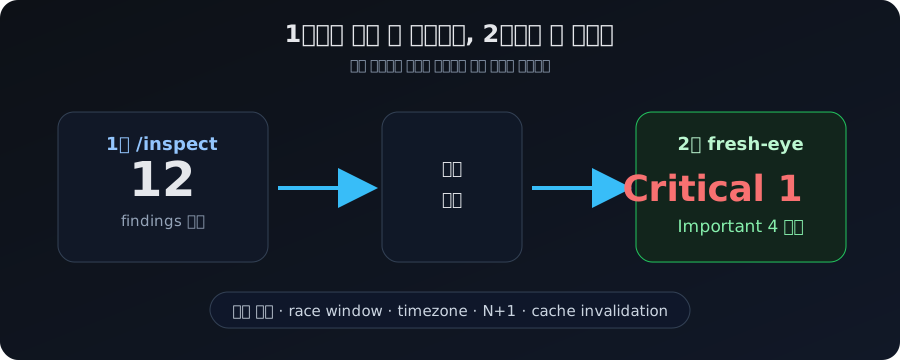
- 1차: 12 findings 발견 → 모두 처리.
- 2차 fresh-eye (같은 PR, 같은 리뷰어 패턴, 다른 prompt): 5건 추가 발견 (Critical 1 + Important 4).
이 글은 두 번째 검토 패스에서만 나온 버그들을 정리한다. AI pair-programming에서 “fresh perspective”의 가치를 정량적으로 보여주는 사례.
배경 — 왜 두 번 검토하는가
CheckUS의 TV 대시보드 시스템(18 모드, 5 vertical slice, 백엔드 60+ 클래스)을 만든 후 /inspect 1차로 12개 finding을 처리했다.
이론상 1차로 충분해야 한다. AI 리뷰어가 4-pass 검토(Correctness / Conventions / Security / Completeness)를 다 거쳤다. 그런데도 2차를 돌린 이유:
“Same code, fresh prompt, different perspective. 1차가 놓친 게 있는지.”
실제로 5건이 더 나왔다. 그 중 Critical 1건은 1차가 정반대로 해석한 사례.
사례 1 — 1차가 정반대로 본 버그
1차 보고: “TvContentController.update()의 글로벌 콘텐츠 게이트가 누락 — TEACHER가 글로벌 콘텐츠 만들 수 있음 (Important).”
1차 픽스: DEVELOPER 역할 검증 추가.
// 1차 fix 후
if (existing.campusId() == null
    || (request.campusId() == null && request.campusId() != existing.campusId())) {
    requireDeveloper();
} else {
    validateAccess(existing.campusId());
}
2차 발견 (Critical): 이 조건문은 정상 케이스를 차단한다.
request.campusId() != existing.campusId()은 Java에서 Long != Long reference equality다. unboxing이 일어나지 않는다. 그리고 request.campusId() == null이 true인 시점에서 null != someNonNullLong은 항상 true다.
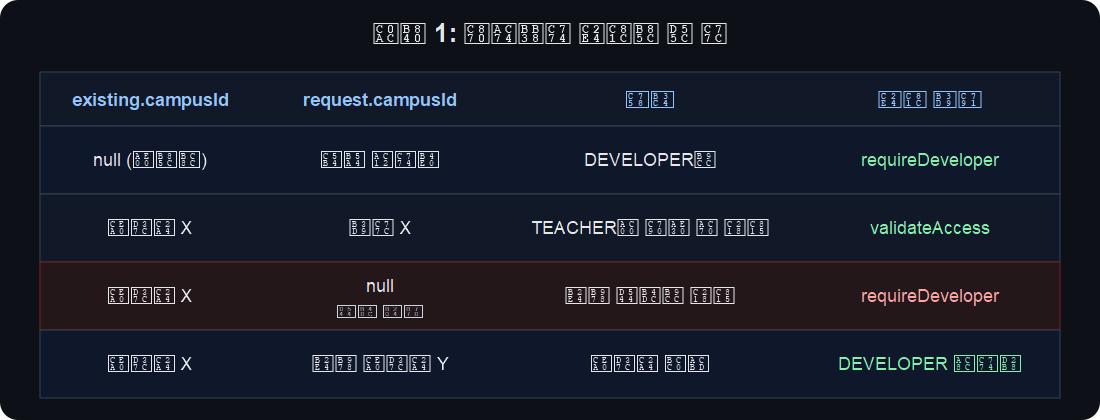
즉 partial update에서 campusId를 보내지 않는 정상 요청이 글로벌 콘텐츠 수정 시도처럼 오해되어 차단된다. 1차는 “권한 우회 가능”으로 봤지만, 2차는 “정상 케이스가 차단된다”는 정반대 결과를 발견.
근본 원인은 Java record는 null 값과 “필드 없음”을 구분하지 못한다는 것. UpdateTvContentRequest.campusId()가 null이면 “변경 안 함”인지 “null로 변경”인지 모른다.
2차 픽스: service에서 campusId 변경 자체를 차단. 글로벌↔캠퍼스 변환은 삭제+재생성으로 강제.
@Transactional
public TvContentResponse update(Long contentId, UpdateTvContentRequest req) {
    TvContent content = contentRepository.findById(contentId).orElseThrow(...);

    // campusId 변경은 PUT에서 허용 안 함 — global ↔ campus 변경은 삭제+재생성으로.
    if (req.category() != null) content.setCategory(req.category());
    if (req.title() != null) content.setTitle(req.title());
    // ... 다른 필드들
}
Controller도 단순화. 기존 콘텐츠가 글로벌이면 DEVELOPER, 아니면 캠퍼스 접근권. 끝.
사례 2 — Race window: existsBySlug 통과 후 INSERT 사이
1차 보고: 슬러그 충돌 시 SLUG_CONFLICT 에러 잘 던진다 (existsBySlug + BusinessException).
2차 발견: 동시 요청 race window. existsBySlug 통과 후 INSERT 사이에 다른 요청이 같은 slug로 INSERT하면 DB UK constraint(uk_tv_profile_slug)가 깨져 일반 500 (DataIntegrityViolationException)이 사용자에게 노출.
2차 픽스:
@Transactional
public TvProfileResponse create(Long campusId, CreateTvProfileRequest req) {
    if (profileRepository.existsBySlug(req.slug())) {
        throw ErrorCode.TV_PROFILE_SLUG_CONFLICT.toException();
    }
    TvProfile profile = ...;
    try {
        return profileRepository.save(profile);
    } catch (DataIntegrityViolationException e) {
        // existsBySlug 통과 후 INSERT 사이에 동시 요청이 같은 slug 사용
        log.warn("TvProfile slug 충돌 (race window): slug={}", req.slug());
        throw ErrorCode.TV_PROFILE_SLUG_CONFLICT.toException();
    }
}
명시적 catch + 같은 비즈니스 에러로 변환. UI에서 일관된 메시지 표시.
사례 3 — Timezone: 브라우저 local time에 의존
1차 보고: D-day 계산이 12월 1~22일에 음수 표시 → 다음 해 advance 로직 추가.
1차 픽스:
function nextThirdThursdayOfNovember(): Date {
  const now = new Date();
  let target = thirdThursdayOfNovemberForYear(now.getFullYear());
  if (target.getTime() < now.getTime()) {
    target = thirdThursdayOfNovemberForYear(now.getFullYear() + 1);
  }
  return target;
}

function thirdThursdayOfNovemberForYear(year: number): Date {
  return new Date(year, 10, day, 8, 40, 0);  // ← 브라우저 local time
}
2차 발견: new Date(year, 10, ...) 생성자는 브라우저 local timezone 기준. KST 환경에서는 정상이지만, kiosk 모드 헤드리스 브라우저(UTC) 또는 VPN 우회 환경에서는 시각이 9시간 어긋난다.
2차 픽스: timezone-explicit 처리.
function thirdThursdayOfNovemberKst(year: number): Date {
  // 날짜는 timezone 무관 → UTC로 weekday 계산
  const nov1Utc = new Date(Date.UTC(year, 10, 1));
  const dayOfWeek = nov1Utc.getUTCDay();
  const offsetToFirstThu = (4 - dayOfWeek + 7) % 7;
  const day = 1 + offsetToFirstThu + 14;
  // KST 08:40 = UTC 23:40 prev day. Date.UTC가 hour=-1 overflow 처리.
  return new Date(Date.UTC(year, 10, day, 8 - 9, 40, 0));
}

function currentKstYear(): number {
  return Number(new Intl.DateTimeFormat('en-CA', {
    timeZone: 'Asia/Seoul', year: 'numeric',
  }).format(new Date()));
}
Intl.DateTimeFormat(timeZone:'Asia/Seoul')로 명시적 KST 추출. 어떤 브라우저 timezone에서도 정확.
datetime-local input 변환도 같은 패턴. new Date(localValue + ':00+09:00')로 KST 명시.
사례 4 — N+1: 5초 polling이 매번 DB hit
1차 보고: tv-interrupt 캐시 90초 TTL로 산출 캐싱 OK.
2차 발견: interrupt resolver는 캐싱돼 있지만, 그 호출자 PublicTvProfileService.getInterrupt()는 5초마다 findBySlug() DB hit. 캐싱 없음.
TV 1대 = 5초 polling → 하루 17,280회 profile lookup
TV 10대 → 172,800회/일
2차 픽스: slug → 메타(campusId, scheduleId, customMessages) 매핑을 1분 캐시.
@Cacheable(value = "tv-profile-slug-meta", key = "#slug")
public InterruptContext getInterruptContext(String slug) {
    return profileRepository.findBySlug(slug)
            .map(p -> new InterruptContext(p.getCampusId(), p.getScheduleId(), p.getCustomMessages()))
            .orElseThrow(...);
}

public Optional<InterruptResponse> getInterrupt(String slug) {
    InterruptContext ctx = getInterruptContext(slug);  // 1분 캐시
    long minuteBucket = System.currentTimeMillis() / 60_000L;
    return interruptResolver.resolve(...);  // 90초 캐시
}
2단 캐시(slug→meta 1분 + minuteBucket 90초)로 5초 polling이 대부분 캐시 hit.
사례 5 — Cache invalidation 누락
1차 보고: 캐시 TTL 1분이라 stale도 운영상 OK.
2차 발견: admin이 프로필 메타 변경(slug, customMessages) 시 캐시 evict 없음. 1분 동안 stale slug → 캠퍼스 매핑이 살아있을 수 있다. 새 slug로 admin이 PR을 만들고 운영팀에 안내했는데, 1분 동안 다른 사용자는 옛 slug → null campus로 조회 실패.
2차 픽스: @CacheEvict annotation으로 메타 변경 시 일괄 evict.
@Transactional
@Caching(evict = {
    @CacheEvict(value = "tv-profile-slug", allEntries = true),
    @CacheEvict(value = "tv-profile-slug-campus", allEntries = true),
    @CacheEvict(value = "tv-profile-slug-meta", allEntries = true),
    @CacheEvict(value = "tv-interrupt", allEntries = true),
    @CacheEvict(value = "tv-battle", allEntries = true)
})
public TvProfileResponse update(Long campusId, Long profileId, UpdateTvProfileRequest req) { ... }
allEntries = true — 캐시 size가 작아 (200개 max) 부하 부담 없음.
결과
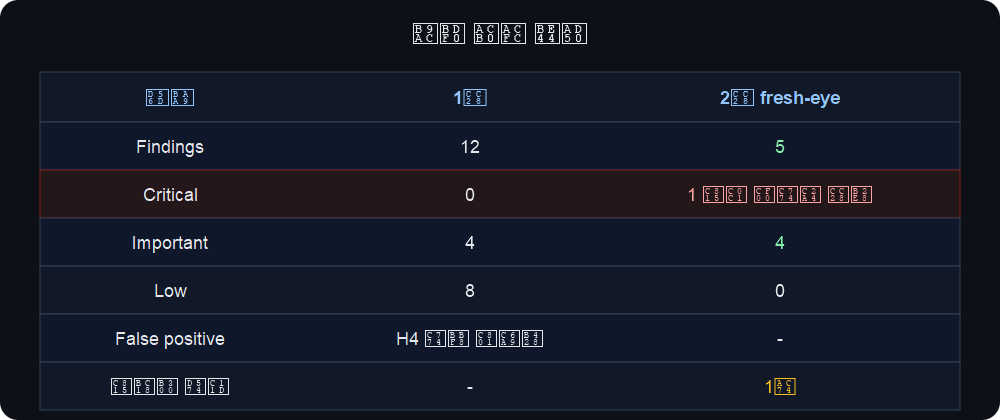
2차에서 발견된 5건 중 4건은 1차가 보지 않은 영역(N+1, race window, cache invalidation, timezone). 1건은 1차가 본 영역인데 정반대로 해석.
배운 점
1. AI 리뷰어도 prompt 설계에 따라 보는 게 다르다. 1차 prompt는 “spec 준수, 규약 준수, 보안” 중심. 2차 prompt는 “1차 fix가 새 버그 도입했는지 + 1차가 놓친 영역(end-to-end 흐름, 운영 시나리오)” 중심. 같은 4-pass 패턴이지만 prompt에 명시한 영역이 달라 다른 버그가 발견됨.
2. 정반대 영향을 발견할 가능성이 있다. 같은 코드를 보더라도 1차가 “권한 우회”로 본 것을 2차가 “정상 차단됨”으로 본 케이스. 두 해석 모두 부분적으로 맞고, 종합하면 코드 자체가 잘못됨.
3. Critical 발견 1건만으로 2차 검토 비용 정당화. 1차 fix 후 commit하고 끝냈다면 production에서 TEACHER가 본인 콘텐츠 수정이 안 되는 사용자 보고를 받았을 것. 2차 검토 비용(LLM 토큰 + 30분)이 그것보다 훨씬 작음.
4. Java record + null 의미론은 위험 패턴.
record는 immutable하지만 “필드 없음” 표현이 없다. partial update API에서 null이 “변경 안 함”인지 “null로 변경”인지 구분 안 됨. clearXxx 플래그 패턴 또는 PUT semantics 명시화 필요.
5. 캐시 invalidation은 캐시 추가 시 같이 설계. 1차에서는 캐시 추가만 했고 invalidation은 누락. 2차에서 evict 추가. 캐시 코드 작성 시 “이 데이터가 변경되는 시점은 어디인가?” 함께 답해야 함.
References
- Spring
@CacheEvict가이드 - Java record + Optional 패턴 논의
- Intl.DateTimeFormat MDN
- 관련 글: 같은 문장을 60번 타이핑했다면, 그건 스킬이다 — 이 반복 요청이
/reinspect스킬이 된 이야기
Comments