5/4 DB incident series
- When a cardinality=1 single-column index beats the compound index
- DB pool exhaustion cascade: do not mistake victim traces for causes
- Latent slow query incident: why “why today?” may have no clean answer
- 124 index anti-patterns found, 19 dropped — why the rest stayed
- JPA @Index is not prod DB index — 5 Entity-DB drift patterns

Introduction
Postmortems often get one unavoidable question: why did it fail today, not yesterday?
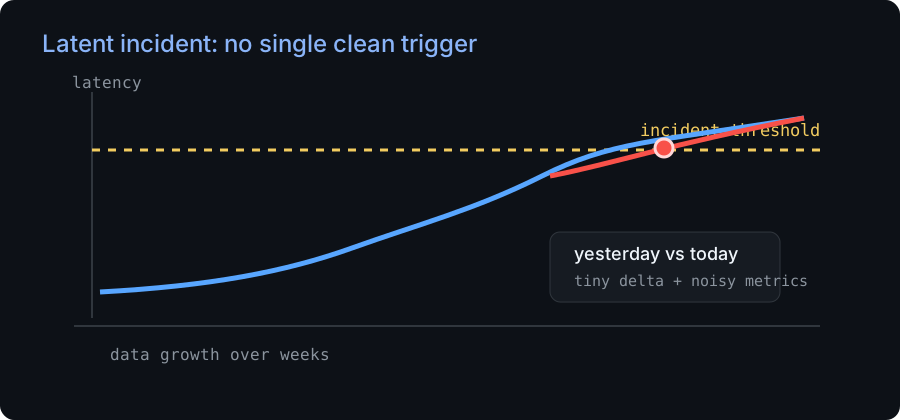
For trigger-driven incidents, that question is productive. For latent slow-query incidents caused by gradual data growth, it can become a trap. The day-to-day difference may be smaller than normal production noise.
Background / Problem
The root cause was fixed quickly: a bad execution plan around a low-cardinality single-column index. But during wrap-up, the operational question remained: why today?
Known facts:
- The slow query had existed since the feature launched.
- The table grew roughly 50x during the previous month.
- The incident happened during a weekday evening peak.
- The same time window had worked the day before.
Hypotheses We Chased
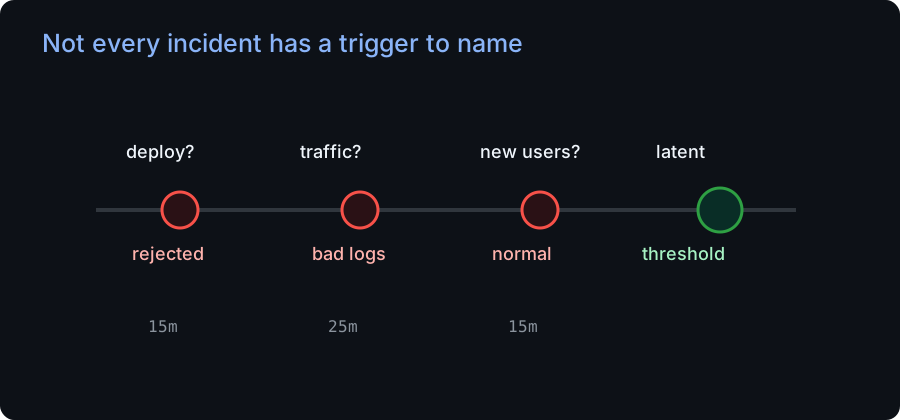
New code shipped today
We reviewed 21 commits from the day. None touched the service path containing the slow query. Hypothesis rejected.
New traffic pattern started today
Nginx logs appeared to show zero calls yesterday and 1,500+ today. That looked convincing until we found the real issue: yesterday’s logs had already rotated away. The premise was false.
A new group of users triggered the path
We identified candidate users from partial logs and compared their past activity. They were normal daily users, not a new cohort.
Conclusion
The remaining picture was accumulation:
- The query had been latent for months.
- Data volume kept growing.
- Peak traffic gradually had less headroom.
- One day, tiny differences crossed the threshold.
Lessons
Separate trigger-driven from latent incidents
If a deployment, config change, or external event directly caused the failure, find it. If data growth and code age point to a latent defect, do not burn unlimited time inventing a trigger.
Ask what data would prove the hypothesis
Before chasing a story, identify the decisive evidence and verify that the data source is trustworthy. Log retention limits are part of the evidence.
Root-cause fix beats trigger theater
For latent incidents, “we cannot isolate a special today-trigger” can be the honest answer. The prevention work is fixing the latent defect and adding earlier signals.
Next
After closing the incident, the right follow-up was to ask whether more latent index traps existed. The next post covers why 124 audit findings became only 19 immediate drops.
References
- Google SRE Book: Postmortem Culture: Learning from Failure
- Monitor data growth and latency curves together, not separately
- Alert on approaching thresholds before they become incidents
Comments